Ramadan Health Guide: Why You Feel Thirsty, Tired, Hungry, and Sick While Fasting—and How to Fight It
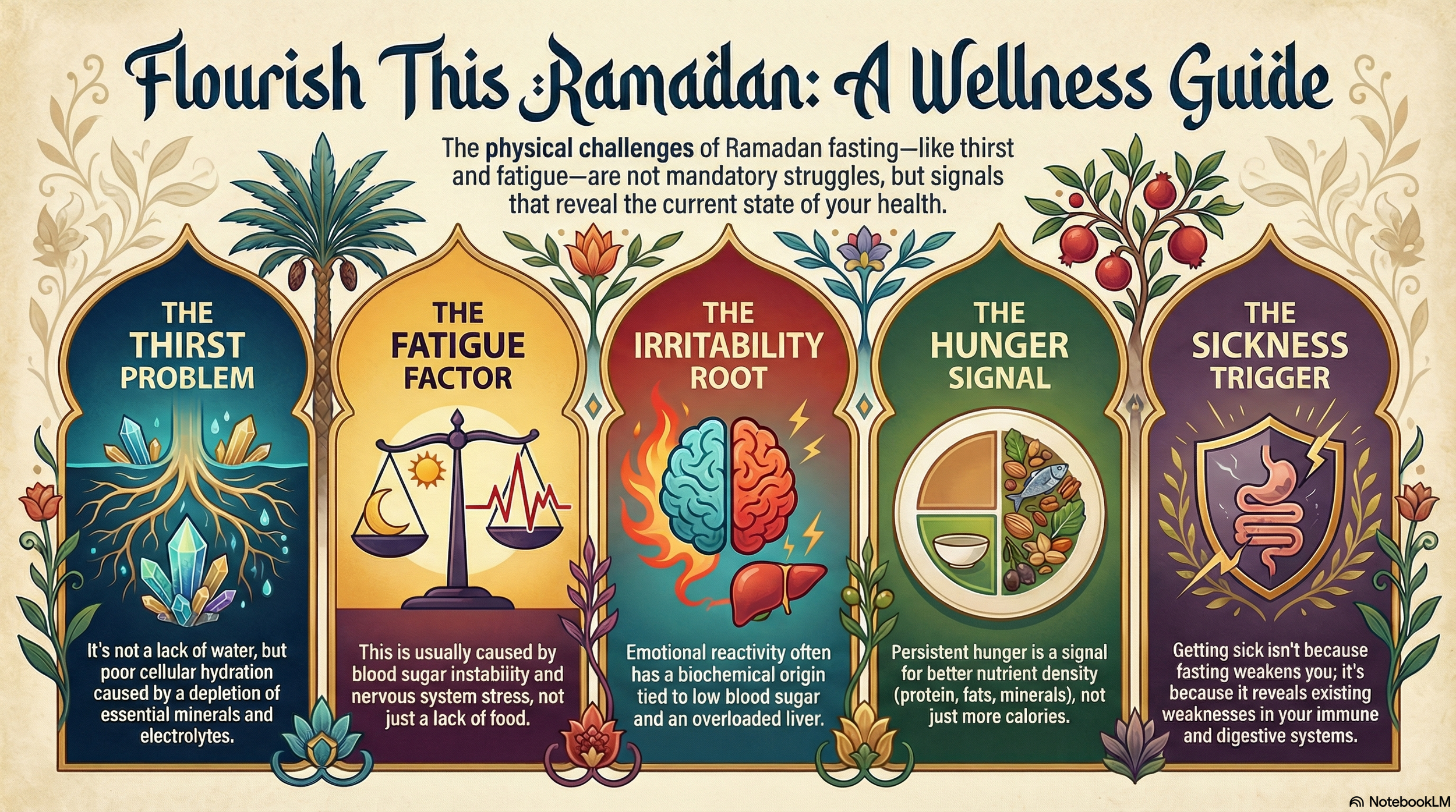
The Physical Challenges of Ramadan are Very Real
Ramadan, the month of mercy and a sacred season of discipline, devotion, and deep spiritual opportunity. But let’s be honest: it also comes with predictable physical struggles: intense thirst, persistent fatigue, irritability, constant hunger, and even illness.
These challenges are so common that many people assume they are simply “part of Ramadan.”
But they don’t HAVE to be.
What fasting during Ramadan actually does is expose the state of your health—especially your physical health. It will show you exactly where you fall in terms of hydration, digestion, blood sugar regulation, nervous system balance, and immune resilience. When these systems are already strained, fasting magnifies the effects. When they are supported, fasting becomes lighter, clearer, and more sustainable.
Ramadan was never meant to weaken us physically to the point that it diminishes our spiritual focus. In fact, when the body is supported correctly, fasting often enhances clarity, patience, and presence.
Let’s explore the five most common Ramadan struggles: why they happen, and how to address them before and during the month, using a holistic, traditional, and physiologically sound approach. This guide explains why fasting during Ramadan often causes thirst, fatigue, irritability, hunger, and illness—and how to prepare the body to fast with energy, hydration, and balance.
1. Why Am I So Thirsty During Ramadan?
One of the most frequent complaints during Ramadan is unrelenting thirst—even after drinking large amounts of water at suhoor.
The problem is not a lack of water.
The problem is poor cellular hydration.
Hydration Is Not About Volume
Drinking excessive water without minerals actually worsens dehydration by flushing electrolytes out of the body. Sodium, potassium, magnesium, and trace minerals are what allow water to enter and stay inside cells.
Ramadan thirst is often driven by:
Electrolyte depletion
Excess caffeine or sugar before Ramadan
Highly processed or salty foods at iftar
Poor digestion that limits absorption
When hydration is addressed only at suhoor, when we’re rushing and often careless, the body simply cannot retain fluids throughout a long fast.
A Better Approach to Hydration
True hydration begins after iftar and continues throughout the night, not in a single meal before dawn.
Key principles:
Sip fluids steadily between iftar and sleep, like my popular Chia-Goji Hydration drink
Include mineral-rich foods and soaked ingredients, like the Nutrient-Rich Green Soup
Avoid ice-cold drinks that shock digestion
Reduce caffeine well before Ramadan begins
Hydration is a preparatory act. When done consistently ahead of Ramadan, thirst during the fast dramatically decreases.
2. Why Am I So Tired While Fasting?
Fatigue during Ramadan is often blamed on lack of food. In reality, it is usually caused by circadian disruption and blood sugar instability.
Late nights, early mornings, social gatherings, and altered eating windows place significant stress on the nervous system. If the body is already running on stress hormones, fasting amplifies exhaustion rather than easing it.
Fatigue Is a Nervous System Issue
Common contributors include:
Skipped or nutritionally-weak iftars
Suhoor meals that digest too quickly —>aim for slower digesting foods like complex whole grains & dates
Inadequate protein and healthy fats
Poor sleep quality, not just sleep quantity
When blood sugar rises and crashes repeatedly, the body compensates with cortisol and adrenaline. This creates short bursts of energy followed by deep fatigue, brain fog, and irritability.
Supporting Sustainable Energy
Energy during fasting comes from stability, not stimulation.
Supportive practices include:
Eating balanced meals that combine healthy protein, high-quality fats, and complex fiber
Prioritizing nourishment at iftar for the next day’s fast
Using warm, grounding foods rather than cold or overly sweet ones
Respecting rest as a form of worship, not weakness
When energy systems are supported, many people report steady alertness even deep into the fasting day.
3. Why Do I Feel So Cranky and Emotionally Reactive?
Irritability, emotional sensitivity, and short tempers have a fundamental spiritual remedy during Ramadan, but they are frequently biochemical in origin.
Low blood sugar, dehydration, and liver overload all affect emotional regulation. When the body is struggling to maintain internal balance, patience becomes harder to access.
The Liver–Emotion Connection
The liver plays a central role in:
Blood sugar regulation
Hormone processing
Detoxification
Emotional equilibrium
Heavy, fried, or excessive foods at iftar place a large burden on the liver. When detox pathways slow, inflammation increases and emotional resilience drops.
This is why crankiness often worsens in the evening or late afternoon.
Gentle Emotional Regulation
Supporting emotional steadiness during Ramadan involves:
Breaking the fast gently (not aggressively)
Avoiding consecutive days of heavy foods
Including bitter and green foods that support liver function
Reducing overstimulation at night
When the body is less inflamed and better nourished, emotional regulation improves naturally without forcing perseverance through exhaustion and clenched teeth.
4. Why Am I Always Hungry While Fasting?
Persistent hunger during Ramadan is rarely about calories. It is about nutrient density.
A person can eat large quantities of food and still be undernourished. When meals lack adequate protein, healthy fats, and minerals, the body continues to signal hunger—even in the absence of true need.
Hunger Is a Signal
Common causes include:
Over-reliance on refined carbohydrates
Sugary drinks and desserts at iftar
Insufficient protein intake
Poor fat digestion
Hunger that appears midday often reflects what was eaten the night before, not the absence of food during the fast.
Eating for Satiety
Satiety comes from nourishment that digests slowly and feeds cells deeply.
Helpful strategies:
Start meals with soups or blended foods
Include seeds, legumes, eggs, or well-prepared grains
Keep suhoor simple, repeatable, and gentle on digestion
Focus on quality, not quantity
When meals are nourishing, hunger softens and mental clarity improves.
5. Why Do I Get Sick Every Ramadan?
Many people notice that Ramadan is the time when they develop headaches, reflux, colds, or digestive issues. This is not because fasting weakens the body—it is because fasting reveals existing weaknesses.
Immunity Depends on Elimination
A strong immune system relies on:
Efficient digestion
Regular elimination
Adequate hydration
Sufficient rest
When waste accumulates due to slowed digestion or dehydration, inflammation rises. The immune system becomes reactive instead of resilient.
Ramadan reduces the body’s margin for error. If foundational systems are already struggling, symptoms appear quickly.
Strengthening Resilience
To support immunity during Ramadan:
Ensure daily bowel movements
Use warm, digestible foods
Support hydration consistently
Reduce late-night overexertion
Prepare the body before fasting begins
Fasting is a powerful tool, and you can gain the most healing benefits when the body is prepared to handle it.
Ramadan Was Meant to Be Sustainable
Ramadan is not meant to be endured through depletion. It is meant to be experienced with presence, steadiness, and spiritual focus.
When thirst, fatigue, irritability, hunger, and illness dominate the month, something is misaligned—not spiritually, but physically.
Preparation is not indulgence.
It is wisdom. That’s what you’ll get in the Ramadan Prep Program-a plan built from experience and timeless wisdom.
By supporting hydration, digestion, blood sugar balance, nervous system regulation, and elimination pathways before and during Ramadan, fasting becomes lighter and worship deepens.
May this Ramadan be one of strength, clarity, and barakah, for your body, mind, and spirit.
-
Thirst during Ramadan is often caused by mineral and electrolyte imbalance, not lack of water. Hydration depends on minerals that help water enter cells.
-
Persistent fatigue usually reflects blood sugar instability, poor sleep quality, or inadequate nourishment at iftar and suhoor.
-
Headaches and illness during Ramadan often indicate dehydration, nutritional gaps or poor absorption, digestive congestion, or inadequate elimination, not fasting itself.
-
Preparation includes improving hydration, digestion, meal timing, nutrient density, and sleep rhythms in the weeks leading up to Ramadan. Fast the White Days to give yourself a quick check-up on your fasting prep.